This page showcases my research contributions (pre-print version) and ongoing work in the areas of Foundation Models, Retrieval-Augmented Generation (RAG), Geometric Deep Learning, Medical Imaging, and Knowledge Graphs. While I continue to develop and refine my research, I am actively working on several projects that will be published in the near future.
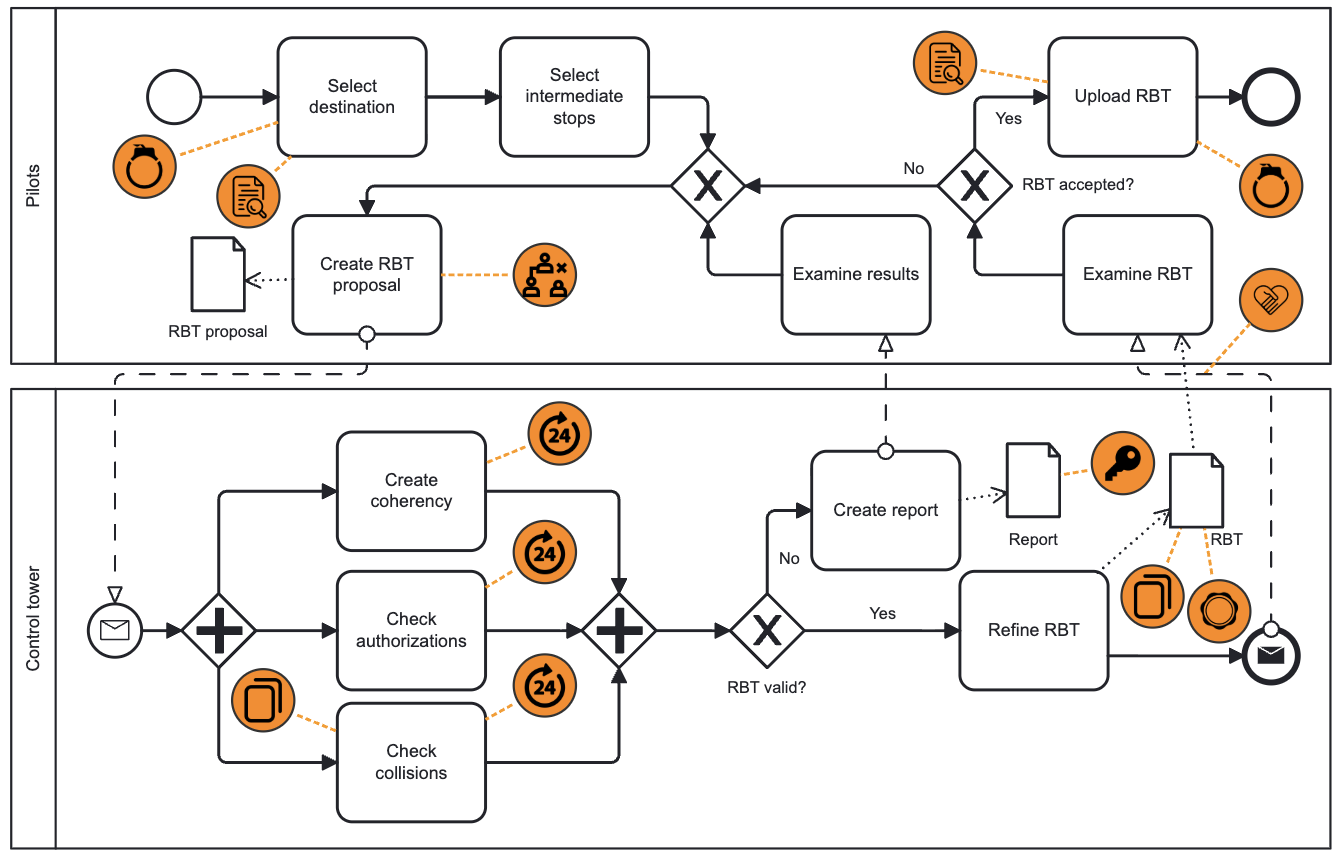
@inproceedings{kamrul2026secbpmn,title={A Hybrid {LLM}-Based Framework for Automated Security Annotation Generation in Business Process Models},author={Islam, Md Kamrul and Henry, Tiphaine and Salnitri, Mattia and K{\"o}pke, Julius and Souihi, Sami},booktitle={24th International Conference on Business Process Management (BPM 2026) [BPM Forum edition]},year={2026},month=may,}
2025
Enhancing Self-Supervised Learning for Image Clustering Using Geometric Deep Learning
Md Kamrul Islam, Xianyun Zhuang, Akash Malhotra, and 1 more author
Contemporary self-supervised learning approaches have significantly advanced unsupervised image analysis, yet their application to medical imaging remains constrained by conventional CNN architectures’ inherent limitations in handling geometric transformations. This research introduces a novel deep clustering framework that incorporates Group Equivariant Convolutional Neural Networks (G-CNNs) to substantially enhance feature representation learning for medical image clustering. Our methodological framework implements a systematic iterative pipeline extending the DeepCluster architecture through dual feature extraction pathways: (1) an AlexNet implementation incorporating Sobel filtering with random rotation augmentation, and (2) a P4M-equivariant CNN architecture that inherently encodes rotation and reflection invariance properties. Evaluated on the NIH Chest X-ray dataset, our approach leverages k-means clustering with iterative pseudo-labeling to progressively refine latent representations. Experimental results demonstrate that the proposed G-CNN framework achieves improved semantic coherence and clustering quality, converging faster than the conventional CNN-based approach. These findings establish the significant potential of geometric deep learning techniques for developing more robust and clinically relevant solutions for medical image clustering and automated disease detection systems.
@article{kamrul2025gcnn,title={Enhancing Self-Supervised Learning for Image Clustering Using Geometric Deep Learning},author={Islam, Md Kamrul and Zhuang, Xianyun and Malhotra, Akash and {Seghouani Bennacer}, Nac\'{e}ra},year={2025},publisher={Zenodo},journal={Zenodo},doi={10.5281/zenodo.17494110},url={https://doi.org/10.5281/zenodo.17494110},}
2024
Retrieval Augmented Generation for Knowledge Graphs
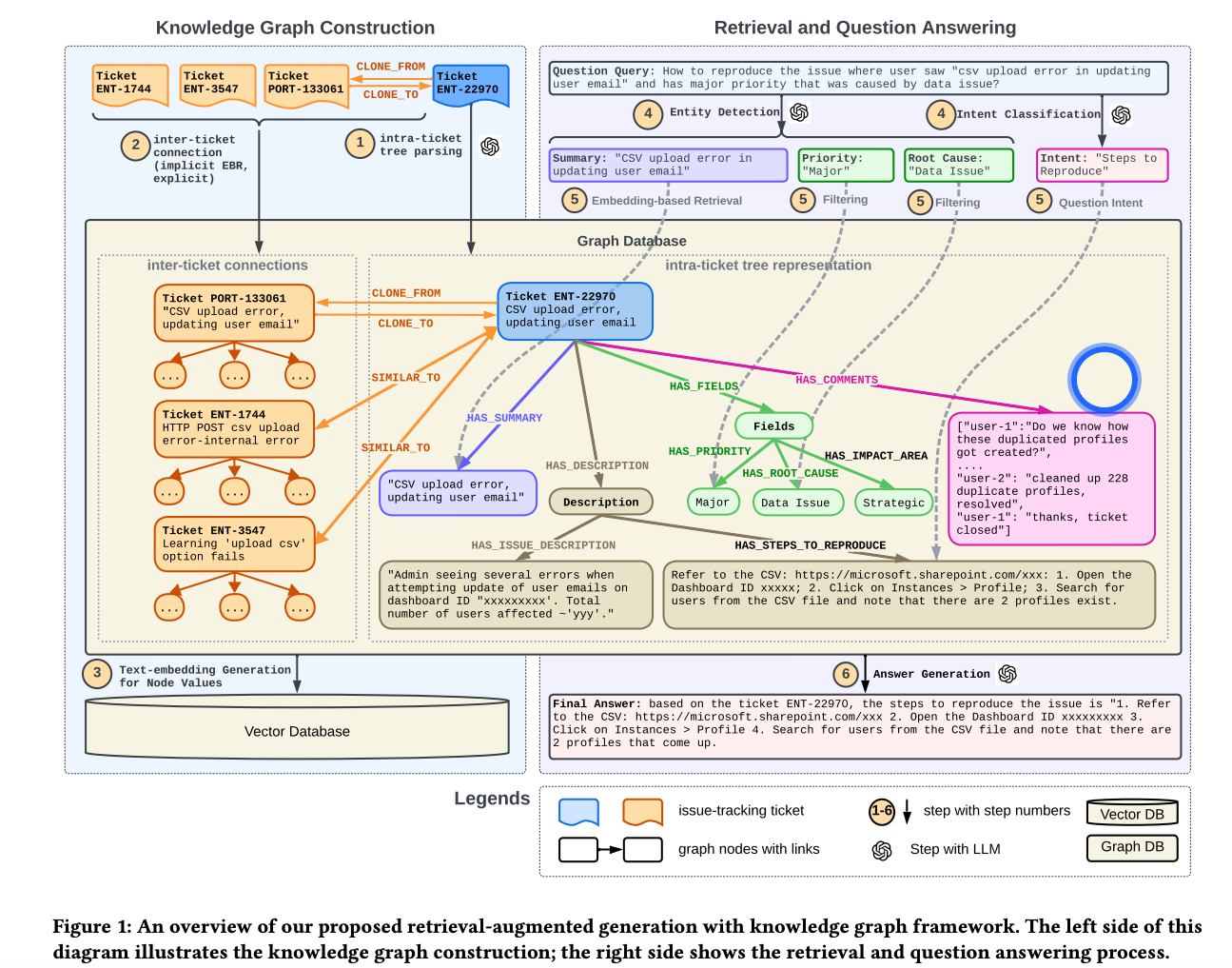
The field of Knowledge Graphs (KGs) has seen significant advancements in recent years, driven by the need to structure and query large-scale, complex datasets effectively. In parallel, another promising technique has emerged in the realm of NLP and Large Language Models (LLM), Retrieval Augmented Generation (RAG). These leverage the power of non-parametric external knowledge bases to enhance the reliability, accuracy, and completeness of LLMs. This literature review aims to provide a comprehensive overview of the state-of-the-art methodologies and applications of RAG, with a focus in the context of KGs. We explore various approaches to integrating retrieval mechanisms with generative processes, highlighting how these hybrid models address challenges such as knowledge incompleteness, real-time data updates, and natural language understanding. Furthermore, we examine the efficacy of RAG techniques in different domains, including finance, healthcare and education, among others, illustrating their potential to exploit the semantics and richness of KGs. Key research contributions, ongoing challenges, and future directions in the deployment of RAG for KGs are also discussed, providing a roadmap for researchers and practitioners seeking to leverage these technologies in their work.
@article{kamrul2024ragkg,title={Retrieval Augmented Generation for Knowledge Graphs},author={Islam, Md Kamrul and {Garc\'{i}a Morillo}, David},year={2024},publisher={Zenodo},journal={Zenodo},doi={10.5281/zenodo.17494287},url={https://doi.org/10.5281/zenodo.17494287},}
2021
Brain Tumor Detection and Classification using CNN
This paper presents a new CNN architecture for brain tumor classification of three types: meningioma, glioma, pituitary tumor, and no tumor from T1-weighted contrast-enhanced magnetic resonance images. The experimental result shows that the proposed CNN model achieves 98% validation accuracy, outperforming VGG-16 (93%), Xception (95%), ResNet-50 (94%), and Inception-V3 (97%). The proposed CNN model requires significantly less computational power and has much better accuracy than other pre-trained models.
@thesis{kamrul2021braintumor,title={Brain Tumor Detection and Classification using {CNN}},author={Islam, Md Kamrul},year={2021},publisher={Zenodo},school={Sichuan University},type={Undergraduate Thesis},doi={10.5281/zenodo.17494372},url={https://doi.org/10.5281/zenodo.17494372},}